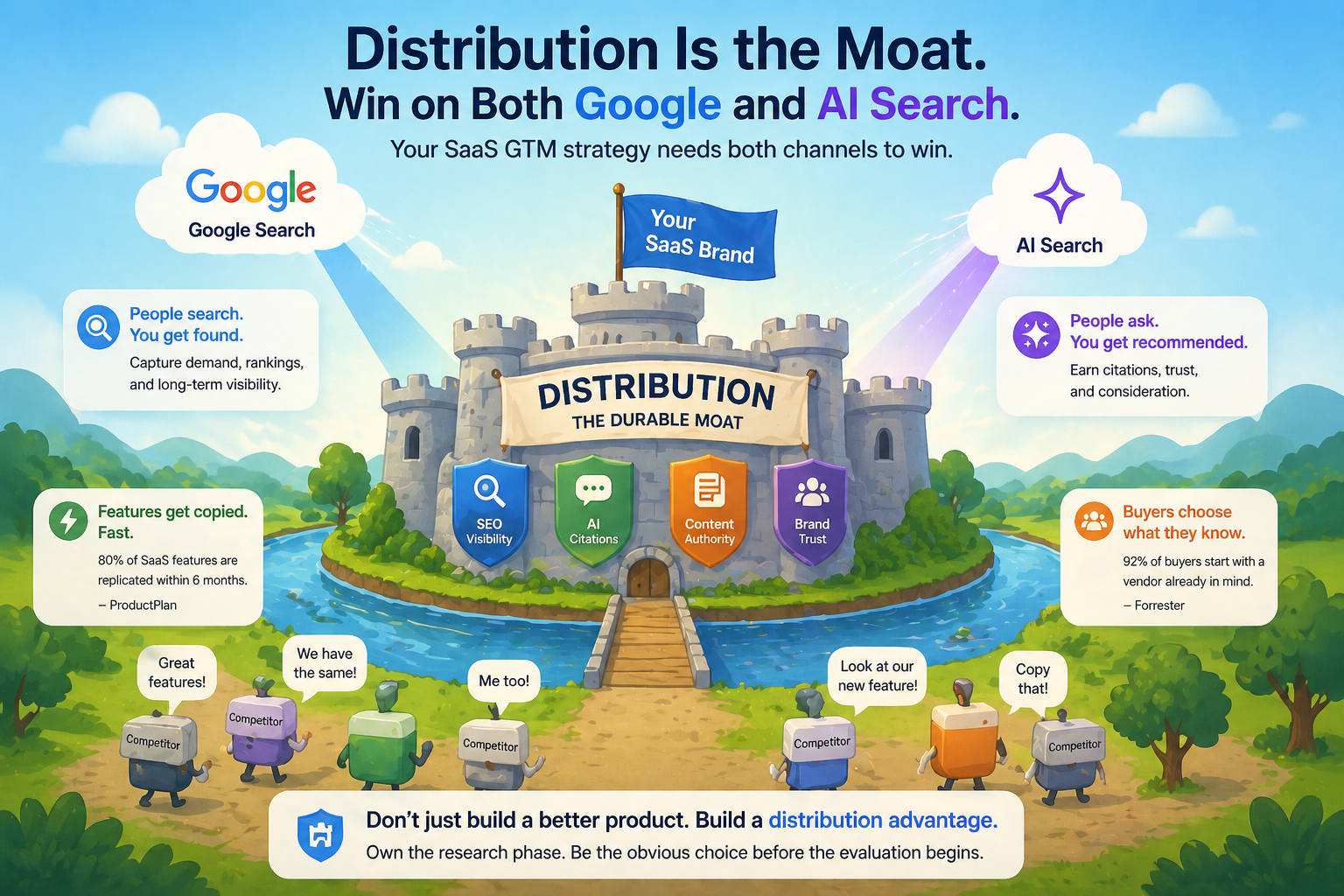
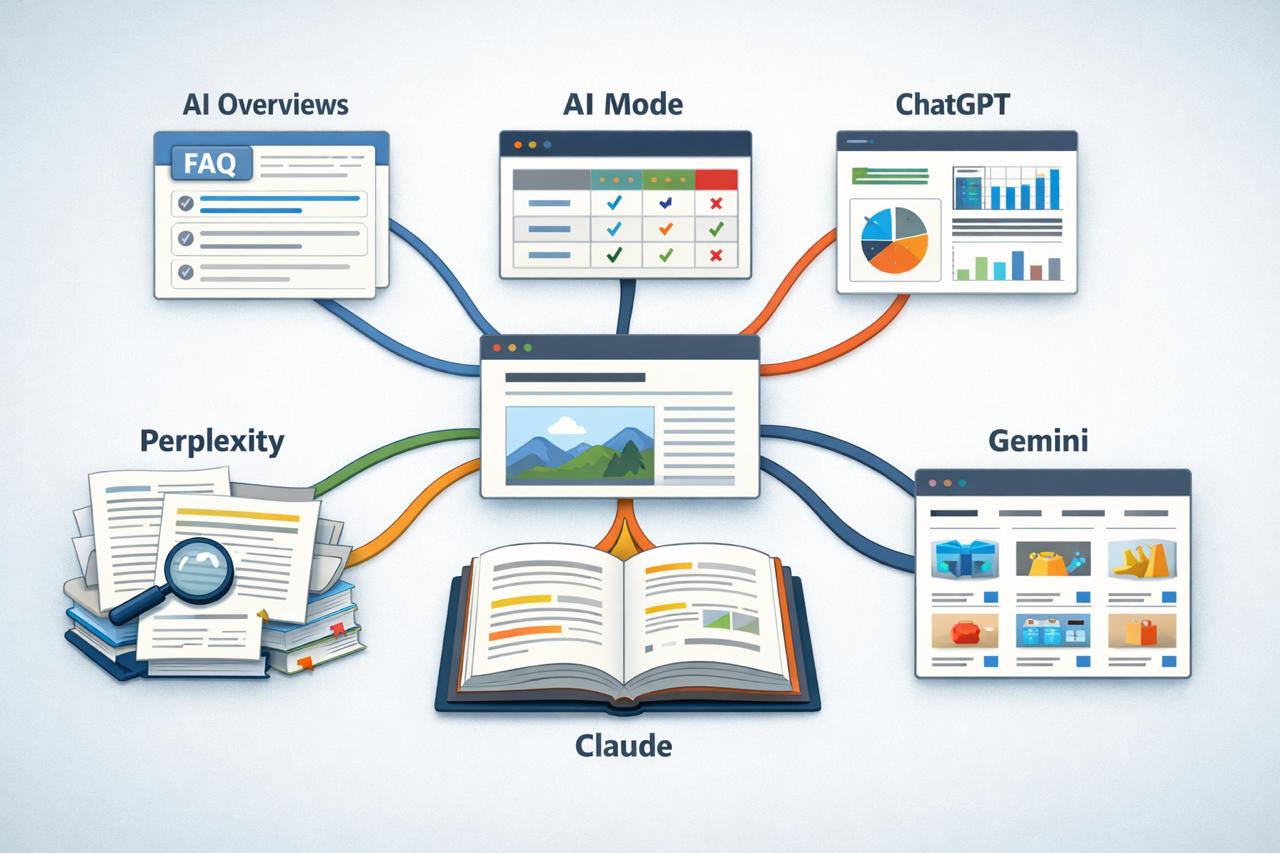

Each AI platform prefers different content types when deciding which brands to mention, and no two platforms agree on what works best

The RankScience AI Content Type Preference Study analyzed five independent datasets to build the first platform-by-platform map of content types that earn the most brand mentions in AI answers

Three content formats earn the most mentions across platforms: comparison pages, data-rich guides and FAQ content, though each format wins on different platforms for different reasons

.png)


The content types that earn brand mentions in AI answers vary by platform, and the formats most B2B companies produce at the highest volume earn AI mentions at the lowest rate. The Content Marketing Institute (CMI), a nonprofit content research organization, found that 92% of B2B companies invest in short-form blog posts as their primary format.
Presence AI, an AI visibility analytics platform, measured AI mention rates across 1,200 pages over 90 days and found that short-form content earns just a 46% mention rate while data-rich guides earn 67%. When RankScience cross-referenced these datasets, the mismatch became clear: the most-produced format earns AI mentions at roughly half the rate of the least-produced format.
The mismatch goes deeper than production volume. Some AI platforms favor structured FAQ content while others ignore it entirely. Some AI platforms reward comparison pages while one platform excludes them. The preferences are specific, they contradict each other, and they do not map to the content types most companies are producing. The data behind each of these preferences, and the three formats that win across most platforms, follows.

The following table shows the gap between what companies produce and what AI platforms actually mention.
Source: Production and effectiveness data from CMI 2025 B2B Content Marketing Benchmarks. AI mention rates from Presence AI (1,200 pages, 90-day study, November 2025 through January 2026).
Structural barriers and traditional SEO formatting are working against short-form content on AI platforms. Our analysis of why AI platforms fail to cite certain content formats found that these barriers block mentions even when the underlying information is strong. Academic research has shown that keyword-dense optimization actively reduces AI visibility, while original statistics increase it.
That is the starting point for this roadmap: understanding the mismatch between what B2B companies produce and what AI platforms mention so you can fix it platform by platform.
The content type you invest in strongly influences which platforms mention you, and the platform that mentions you strongly influences whether you get awareness, traffic or qualified leads. Not all AI mentions carry the same business value. Some platforms generate visibility in contexts where users rarely visit your website afterward. Others send fewer visitors, but those visitors are further along in the buying cycle.
To map these differences, the RankScience AI Content Type Preference Study, a cross-study analysis by RankScience, reviewed five published datasets:
Each study used different datasets and definitions. This analysis is directional, not experimental, and our goal was to identify which content types earn AI mentions most consistently across platforms. "The pattern only becomes visible when you map all six platforms simultaneously," says Dana Davis, CEO of RankScience. "No single published study makes this connection."
A joint academic study from Princeton, Georgia Tech, the Allen Institute for AI and IIT Delhi found that adding original statistics to content increases AI visibility by 30 to 40%, while keyword-dense optimization reduces it by 10%. This does not mean keywords are irrelevant. Strong traditional search rankings still increase your chances of being considered by AI platforms, especially for AI Overviews, which pull primarily from top-ranking content.
But the specific format you choose determines whether you actually get mentioned once you are considered. Content that combines relevant keywords with original data tends to perform well for both Google and AI platforms.

That universal principle plays out differently on each platform. The six profiles that follow show exactly how.
Here is what each platform prefers and what it means for your content strategy.
Google AI Overviews, the feature that displays AI-generated summaries above traditional search results, is the only platform in this study where FAQ and how-to content outperforms comparison and evaluation content.
AI Overviews focuses almost entirely on informational queries. It favors content that answers questions directly rather than content built for purchase evaluation.
AI Overviews is a brand awareness channel, not a traffic channel. If your business depends on being known in your category, FAQ and how-to content optimized for AI Overviews puts your brand in front of the largest audience of any AI feature. Pair it with content on other platforms that convert that awareness into visits.
Google AI Overviews and Google AI Mode need separate content strategies because they serve different stages of the buying cycle and reward opposite content types. AI Overviews answers informational questions and favors FAQ content. AI Mode supports evaluation and comparison and favors pages built for purchase decisions.
BrightEdge found that AI Overviews surfaces 1.4 brands per informational query while AI Mode surfaces 8.3 brands per consideration query. Ahrefs found these two products share the same mentioned URLs only 13.7% of the time. Treating "Google AI" as one channel means building content for the wrong product half the time.
Google AI Mode, the deeper research experience users enter from Google search results, sends visitors to your website and rewards content built for evaluation.
AI Mode serves users who are actively comparing options before making a decision. It favors content that helps users evaluate alternatives with evidence.
If your product or service is evaluated against alternatives, comparison pages and pricing content should be your priority for AI Mode. The 69% click-through rate and 3.7 results checked per session mean AI Mode visitors are actively researching, not just browsing, and they visit multiple websites before deciding.
ChatGPT, OpenAI's conversational AI platform, serves the widest range of query types of any platform in this study, from research questions to content creation, and the content it references depends on what the user is asking it to do.
The majority of ChatGPT queries are traditional intent types (informational, commercial, transactional, navigational and conversational), but over a third are generative queries where users ask ChatGPT to build something, and those mentions are invisible to your analytics.
Prioritize data-rich content that serves as useful raw material for both research and generative queries. If your content contains original data that ChatGPT can reference or weave into a user's project, you get mentioned. If your content exists to rank for Google keywords, ChatGPT has no reason to pull from it. Over a third of ChatGPT mentions never appear in your analytics, which makes original data your best investment for visibility on this platform.
Perplexity, an AI search engine that provides citation-backed answers, is the platform where users are actively evaluating options before making a decision, and where your content needs to be structured as evidence they can verify.
Perplexity serves users performing deep, multi-step research. A joint study between Perplexity and Harvard analyzing hundreds of millions of interactions found that most AI platform usage centers on productivity and learning rather than casual browsing. Perplexity favors content with sourced claims and current data.
Plan a 90-day refresh cycle for your highest-value pages targeting Perplexity. If your buyers do extensive research before purchasing, Perplexity is the platform where well-sourced, recently updated comparison content earns the most mentions. Stale content loses ground here faster than on any other platform.
Claude, Anthropic's AI assistant, represents a small share of overall AI referral traffic, but for companies with the deep, data-rich content Claude prefers, the visitors it sends are among the most engaged in any dataset we reviewed.
Claude serves professionals performing deep, analytical tasks. Bloomberry, a data analytics platform, analyzed 44,000 companies and found that Claude adoption is concentrated in regulated, high-value sectors including software, financial services, insurance and healthcare, where detailed evaluation drives purchasing decisions. Claude uses just 1 to 2 citations per response, selecting one authoritative source rather than hedging across many.
Invest in comprehensive, single-topic guides with original data. Claude's extreme selectivity (1 to 2 citations per response) means the content it does mention carries outsized weight with professional buyers in high-value sectors. If you sell high-ticket B2B products where one qualified visitor matters more than a hundred casual ones, Claude's preferences should shape your content investment.
Gemini, Google's AI platform integrated across Android, Workspace and Chrome, mentions more brands per query than any other platform in the datasets we reviewed and treats every stage of the buying cycle roughly the same.
Gemini serves the broadest user base of any AI platform in this study because it is embedded in products hundreds of millions of people already use. It favors content with clear product descriptions and category context over depth on any single topic.
Make sure your product pages clearly describe what you offer, who it is for and how it compares to alternatives. Gemini's rapid growth and high brand density per query make it the platform where breadth matters most. If your business depends on broad awareness and your buyers search across many categories, well-structured product and category pages are the priority.
With all six platform preferences mapped, three content formats stand out as winners across most of them.
Three content formats earn the most brand mentions across AI platforms: comparison pages, data-rich guides and FAQ content. Each format earns higher mention rates than other formats on nearly every platform, though each has its own strengths and limits.
AI platforms also do more than answer research questions. Users draft documents, build plans, write code and compare options inside these platforms, and when a platform pulls from your content to assemble those outputs, the brand mention is invisible to your analytics. Profound measured this at 37.5% of ChatGPT queries. A joint Perplexity-Harvard study of hundreds of millions of interactions found that most AI platform usage centers on productivity and learning rather than casual browsing. The content formats that earn mentions in research queries also tend to be the formats these platforms pull from when building deliverables for users.
Comparison content earns strong or the strongest mention rates on AI Mode, ChatGPT, Perplexity, Claude and Gemini. The only exception is AI Overviews, which pulls back from commercial content. Presence AI measured comparison content at a 61% mention rate overall, with platform-specific rates of 63% on ChatGPT and 59% on Claude.
Comparisons that perform well on AI platforms go beyond direct competitor matchups. Feature comparisons across product categories, technology stack comparisons, methodology comparisons and pricing model comparisons all give AI platforms the structured, evaluative content they prefer to mention. The comparisons that earn the most mentions use structured data tables, clear feature matrices and neutral, evidence-backed claims rather than subjective marketing copy.
If your product or service is something buyers evaluate against alternatives, comparison content is the single highest-leverage content investment for AI visibility across platforms.
Data-rich guides earn the strongest mention rate on Claude (69%, highest of any content type on the platform) and perform well on Perplexity, where original research combined with recent data earns the highest mentions. As the Princeton/Georgia Tech study showed, original statistics are one of the strongest signals AI platforms use when selecting content to reference.
If your company has proprietary data, benchmarks or case study results, turning those into structured guides gives AI platforms the kind of content they prefer to mention.
Opinion-driven content without supporting data earned the lowest mention rates of any content type across every platform in this study. On Claude, Presence AI measured opinion content without data at just an 18% mention rate, the lowest of any content type on any platform. Blog posts built around traditional SEO keyword optimization without original data or structured evidence performed only slightly better at 46% overall.
AI platforms favor content they can verify, extract and attribute. Opinion pieces give them nothing to work with. If your content library is heavy on perspective pieces and light on evidence, that is the first place to restructure.
The following table brings all six platform preferences together in one view.
Each AI platform in this study prefers different content types, and no single format wins everywhere. The table shows which content types earn the strongest and weakest mention rates on each platform and what the preference means for your content strategy.
Source: The RankScience AI Content Type Preference Study, March 2026. Cross-study analysis of Presence AI, BrightEdge, Profound, SE Ranking, Ahrefs, Semrush and Princeton/Georgia Tech data.
Shifting even a portion of your content investment from unstructured blog posts toward comparison guides and original research can improve your AI mention rates across multiple platforms at once. Here is how to start applying the findings from this study to your own content library.
The next step after auditing your content library is seeing which specific pages AI platforms are already mentioning, which ones they are passing over and why. The average B2B company has hundreds of published pages, and without a page-level diagnostic, there is no way to tell which ones are earning AI mentions.
RankScience's AI visibility snapshot shows you where you stand by analyzing what AI platforms are already doing with your content:



Comparison pages and comprehensive guides with original data earn the highest mention rates across AI platforms. Presence AI's 90-day study of 1,200 pages found data-rich guides earn a 67% mention rate compared to 46% for short-form content. These formats earn more mentions across the platforms we analyzed despite each platform having different specific preferences.
SEO Ranking found that content updated within the last 90 days earns a 2.1x mention lift on Perplexity, the strongest recency signal of any AI platform in this study. For Perplexity, updating means adding new data, refreshing statistics and incorporating recent developments, not just changing the publish date. Quarterly updates to high-value pages are a practical starting point for Perplexity visibility.
Google AI Overviews and Google AI Mode reward opposite content types. AI Overviews favors FAQ content for informational queries and generates fewer website visits than traditional search results. AI Mode favors comparison content and sends visitors to your website in 69% of sessions. Ahrefs found these products share the same mentioned URLs only 13.7% of the time.
It depends on your business model and where your buyers are in the buying cycle. High-ticket B2B companies should prioritize Claude and Perplexity, which attract users doing extended evaluation before purchasing. Businesses needing broad awareness should focus on AI Overviews and Gemini. Companies whose buyers compare before purchasing should start with AI Mode. Match the platform to your buying stage.
AI search optimization (GEO, AEO, LLMO) focuses on getting your company cited when humans use AI platforms to research options. Agentic commerce goes further: the AI agent evaluates vendors against criteria and builds shortlists with minimal human involvement. The foundation is the same, but agent selection requires comparable capabilities and independently verifiable credibility.
Unstructured content earns the lowest mention rates of any format in this study. Pages that rely on keyword optimization without comparisons, original data or extractable evidence give AI platforms nothing concrete to verify, extract or attribute. AI platforms prefer content they can pull specific, attributable claims from, which is why structured formats consistently outperform.

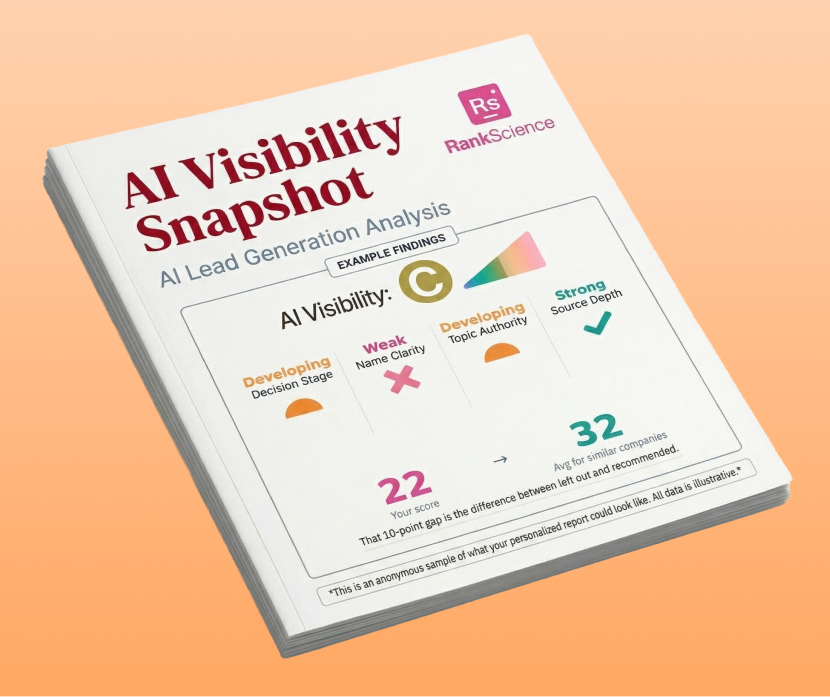
The free RankScience AI Visibility Snapshot shows exactly where you stand across major AI platforms like ChatGPT and Google AI Overviews.
Get Your Free AI Audit
RankScience LLC
2443 Fillmore St #380-1937,
San Francisco, CA 94115
© 2026 RankScience, All Rights Reserved