
Independent med spas already have what chains can't replicate: clinical expertise, provider trust and patient relationships worth $12,000 to $22,000+ over five years. The challenge is making those advantages visible where patients actually research treatments and choose providers.

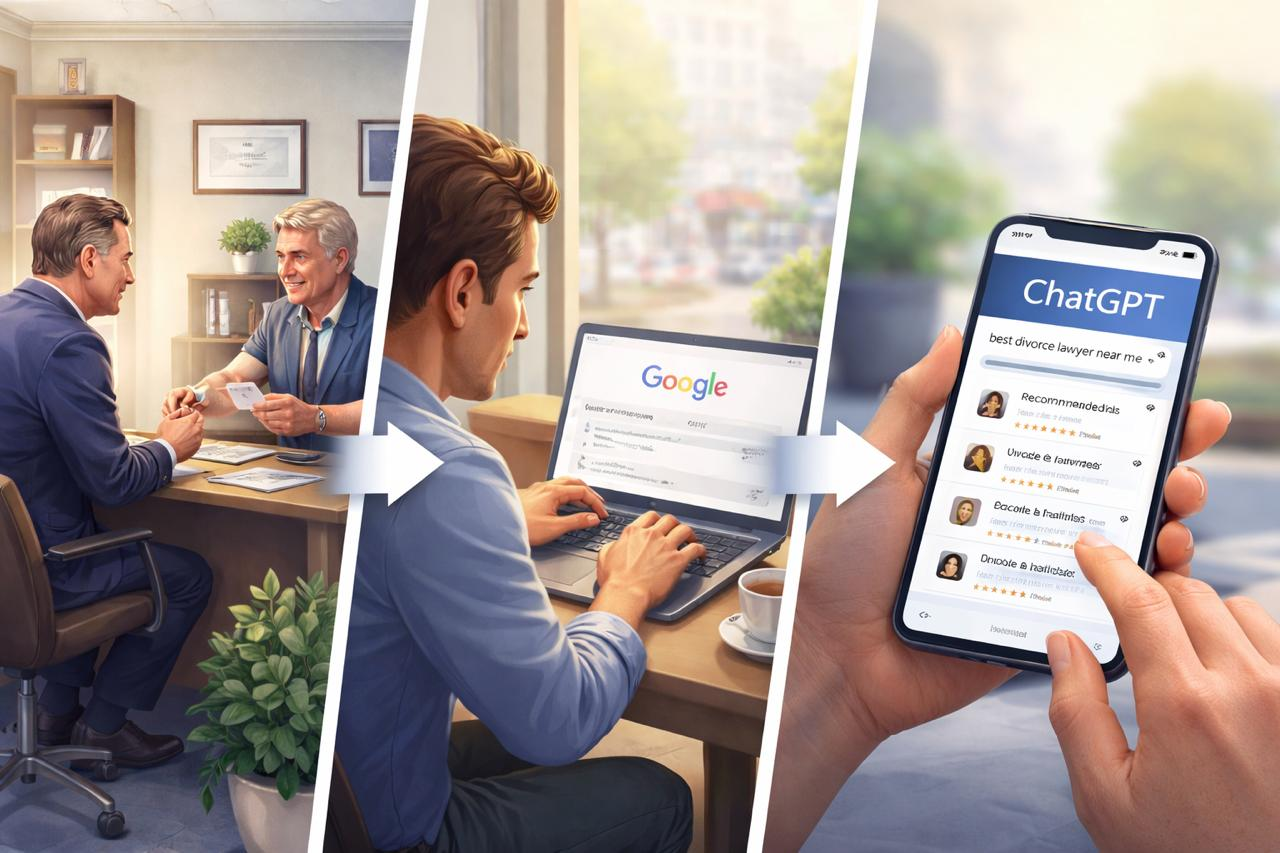
The patient journey has split into two phases: treatment research (increasingly shaped by AI) and provider selection (still governed by traditional local search). Growing practices show up in both.

Med spa marketing carries regulatory and algorithmic constraints no other local business faces, and recent Google core updates hit this vertical harder than almost any other category

.png)


The U.S. med spa marketing landscape has never been more competitive or more concentrated. A 2025 report from Growth99, an aesthetic industry analytics firm, found that 81% of practices rate differentiation as extremely challenging, and 35% reported zero revenue growth in the past year.
The market itself is booming. NovaOne Advisor, a healthcare market research firm, projects the U.S. med spa industry will grow from $6.9 billion in 2024 to $28.2 billion by 2034. The challenge isn't patient demand. It's making sure those patients find your practice instead of the competition.
Much of that growth is flowing toward well-capitalized chains. Kline + Co., a market research firm, reports that nearly 80% of top-performing providers are investor-backed. These chains, fueled by venture capital and private equity, compete on price and volume, with some reportedly offering Botox at roughly $8 per unit compared to $14 at independent practices.
According to AmSpa (the American Med Spa Association), 81% of med spas remain single-location businesses generating an average of $92,167 in monthly revenue. Independent practices can't out-price or out-scale a chain with institutional capital behind it.
Independent practices compete on something chains can't replicate. Patients don't choose a med spa the way they choose a gas station. A 2025 academic study from Saint Francis University surveying 147 consumers found that referrals and word of mouth received the strongest agreement ratings for provider discovery, significantly outpacing social media platforms.
Patients want to trust the person performing the procedure. That trust, built on clinical expertise, provider reputation and patient relationships, is something independent practices have. Chains rotating injectors across six locations do not.

Understanding where that visibility matters starts with how the patient journey actually works.
The patient journey in aesthetic medicine has fundamentally changed. Patients no longer start by searching for a med spa. They start by researching a treatment. The queries have shifted from "med spa near me" to treatment-specific searches like "how many units of Botox do I need" and "Sculptra vs. filler results." Patients decide what they want first, then decide where to get it.
Injectable treatments function as the entry point to a much larger patient relationship. Neurotoxins and fillers are the revenue anchors for most practices: short treatment times, high margins and repeat frequency every three to four months. But the real financial value comes from what happens after that first appointment.
Industry retention data from Zenoti, a spa and salon management platform, shows a 25 to 35% cross-sell conversion rate for patients trying a second treatment category. The Aesthetics Junkie, an industry publication, reports that a Botox or filler patient spending $2,000 to $5,000 annually can double to $5,000 to $10,000 with add-on services like laser resurfacing, PRP or body contouring.
The lifetime value gap between single-service patients and multi-category patients is where growth separates from stagnation.
Source: Dean Garland, a med spa business consultant, 2026 patient LTV segmentation model. Premium patients follow protocol-driven quarterly visit patterns across multiple treatment categories.
The retention data reinforces why this pipeline matters. AmSpa reports that 78% of neurotoxin patients plan to return within a year, but only 36% actually rebook with the same provider. The average patient takes 12 to 24 months to expand into additional categories like laser or body contouring.
Practices that capture a patient during the initial injectable research phase don't just gain one appointment. They gain access to a relationship worth $12,000 to $22,000 over five years. Practices invisible during that research phase lose the entire lifetime value curve.
Given these stakes, understanding why med spa marketing operates under different rules than every other local business becomes critical.
Google evaluates med spa websites as health information, not local business content. That single classification changes everything about how practices can compete for search visibility. Google designates medical spa content as YMYL ("Your Money or Your Life"), a category applied to content that could directly affect a reader's health or financial wellbeing.
A restaurant with a thin "About Us" page can still rank for local searches. A med spa with a thin page about Botox side effects faces active algorithmic suppression.
The consequences are documented. An industry analysis of 247 medical aesthetic and plastic surgery domains found that these websites experience manual action rates 340% higher than general medical websites. Google's December 2025 core update hit even harder.
Industry analysis found that 67% of health and medical sites reported negative ranking impacts from the December 2025 core update, and mass-produced AI content lost 60 to 95% of its search traffic. The sites that gained search visibility? Those with topical authority clusters of 10 to 15 quality supporting articles saw an average 23% increase.
Google's E-E-A-T framework (Experience, Expertise, Authoritativeness, Trustworthiness) now evaluates whether content creators have firsthand clinical experience with what they describe. Content about Botox must reflect the experience of practitioners who actually administer it, not generic marketing copy repurposed from a template.
The algorithmic scrutiny compounds with federal regulatory constraints that no other local business faces. The FTC (Federal Trade Commission) holds med spa advertising to pharmaceutical-grade substantiation standards with penalties up to $43,792 per violation. The FDA restricts how practices describe treatment outcomes. HIPAA governs how practices use patient testimonials, before-and-after photos and review responses. A claim that would be normal promotional enthusiasm for a restaurant or fitness studio becomes a federal compliance risk for a med spa.
These constraints make visibility harder to earn, but the practices that clear the bar benefit from a competitive moat that generic businesses never have to build.
Provider selection still runs through traditional local search, and that isn't changing anytime soon. BrightEdge, an enterprise SEO platform, found that Google removed AI Overviews from local provider queries entirely between December 2024 and December 2025. When a patient searches "med spa near me" or "best Botox clinic in [city]," they get the Local Pack and organic results, not AI-generated answers.
The Local Pack (Google's map-based three-pack of local results appearing above organic listings) is where provider selection happens. Research shows the Local Pack captures 44% of clicks for location-based medical searches. The conversion behavior is immediate: 72% of local searchers visit a business within five miles, and 76% of people searching on their phone visit within 24 hours.
The local search foundation determines whether patients find your practice at the moment they're ready to choose. Practices not visible in the Local Pack for key treatment-plus-city queries are effectively invisible to the highest-intent local patients.
While provider queries remain AI-free, the treatment research that precedes provider selection has been transformed by AI. A March 2026 nationally representative KFF (Kaiser Family Foundation) Tracking Poll found that 32% of U.S. adults now use AI for health information.
A separate 2025 survey of over 6,000 patients by Health Union, a digital health community platform, found that 18% have specifically used ChatGPT or Gemini for health research. The Annenberg Public Policy Center at the University of Pennsylvania found that six in 10 Americans consider AI health information reliable.
The information patients receive through AI is substantive. A 2026 peer-reviewed study published in PMC (PubMed Central) tested ChatGPT on cosmetic injection consultation questions selected by board-certified plastic surgeons and found it demonstrated 94.5% safe responses and 58.3% comprehensive ratings. Patients are forming treatment expectations and trust impressions through AI answers before they ever interact with a practice.
On Google itself, AI Overviews have reshaped how treatment information reaches patients. BrightEdge, an enterprise SEO platform, found in its December 2025 analysis that AI Overviews appear in 89% of healthcare searches, up 30 percentage points since 2023, with treatment and procedure queries reaching near-total coverage.
After Google briefly pulled AI Overviews from some health queries in January 2026, it relaunched in March 2026 with stricter authority requirements that most independent practices can't currently clear.
Treatment comparison queries ("Botox vs. Dysport"), safety queries ("is CoolSculpting safe") and cost queries ("how much does lip filler cost") are the research patients conduct before choosing a provider. Those queries now get AI-generated answers before any organic listing appears. The practices that AI platforms cite during this research phase shape patient expectations. The practices that aren't cited are invisible during the stage of the journey that determines which provider the patient searches for next.

Combined, AI Overviews and the Local Pack now capture over 80% of clicks for medical queries. Practices missing either visibility layer lose patients at one of the two decision points in the patient journey.
The practices gaining search and AI visibility share a pattern, and it isn't a bigger marketing budget. RankScience works with independent practices across the country, and the ones pulling ahead have recognized three things that most practices haven't.



RankScience approaches med spa marketing as a specialized discipline because Google classifies med spa content as YMYL (Your Money or Your Life), subjecting it to health-information-level scrutiny that restaurants, fitness studios and other local businesses don't face. Federal regulators also hold med spa advertising to pharmaceutical-grade standards with penalties up to $43,792 per violation, requiring vertical-specific strategies.
RankScience tracks AI visibility for med spa clients because patients now research treatments through AI tools before searching for a provider. KFF polling shows 32% of U.S. adults use AI for health information, and treatment queries trigger AI Overviews at near-total rates on Google. Patients form expectations through AI-generated answers before they ever visit a practice website.
RankScience builds traditional local SEO foundations for med spa clients because Google removed AI Overviews from provider queries entirely between December 2024 and December 2025. When patients search "med spa near me," they see the Local Pack and organic results. The Local Pack captures 44% of clicks for medical searches, making local SEO the mechanism for provider selection.
RankScience uses lifetime value data to guide med spa marketing strategy because the gap between patient types is significant. Single-category injectable patients average $3,600 to $6,000 over three to five years, while multi-category patients reach $12,000 to $22,000 or more. That 4 to 13x difference makes the initial injectable appointment one of the most valuable acquisition moments.
RankScience helped med spa clients navigate the December 2025 core update, which hit health and medical sites hardest. Industry analysis found 67% reported negative ranking impacts, and sites using templated descriptions and mass-produced AI content lost 60 to 95% of search traffic. Sites with 10 to 15 quality supporting articles gained an average of 23% in visibility.
RankScience builds both search and AI visibility for med spa clients because the patient journey has two phases: treatment research (shaped by AI Overviews) and provider selection (governed by traditional local search). Together these two layers capture over 80% of clicks for medical queries. Practices missing either layer lose patients at one of the two decision points.

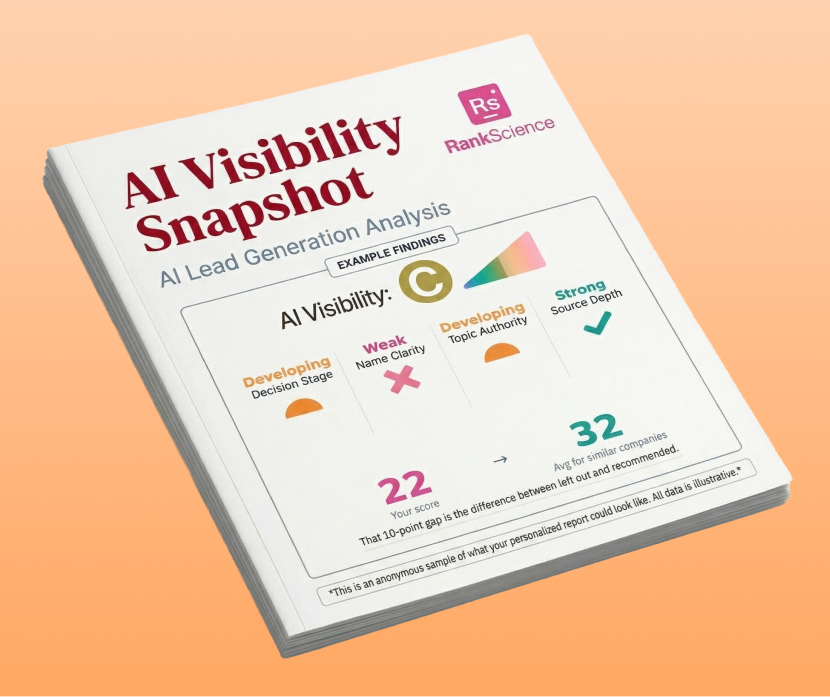
The free RankScience AI Visibility Snapshot shows exactly where you stand across major AI platforms like ChatGPT and Google AI Overviews.
Get Your Free AI Audit
RankScience LLC
2443 Fillmore St #380-1937,
San Francisco, CA 94115
© 2026 RankScience, All Rights Reserved