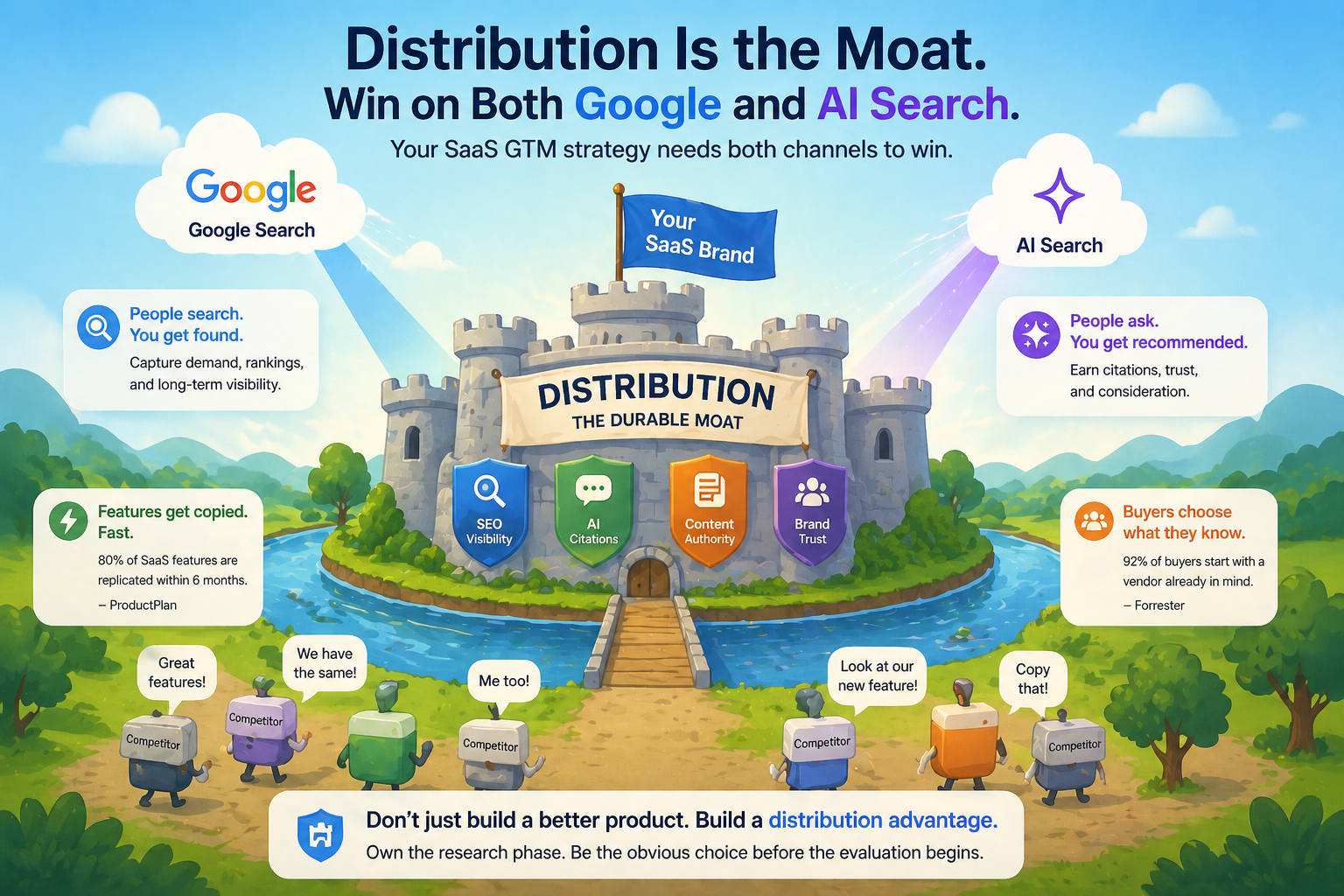


AI platforms heavily favor established publishers over fintechs when YMYL standards require institutional authority

82% of AI citations come from earned media, specifically journalism and established outlets with years of press coverage

Traditional SEO can't build the authority signals (credentialed authors, regulatory citations, earned media) AI platforms require for financial content

.png)

Your fintech company publishes excellent content about investment strategies, retirement planning, or financial decision-making. It ranks decently on Google. But when prospects ask ChatGPT, Gemini, Perplexity, or Claude for financial advice, AI platforms predominantly cite traditional banks and financial media.
This isn't hypothetical. 66% of Americans using generative AI have already used it for financial tasks, and with 800 million people using ChatGPT weekly, AI platforms have become where prospects start their financial research.
This pattern is systematic, not random. Google's YMYL (Your Money or Your Life) framework gives even more weight to E-E-A-T, which stands for Experience, Expertise, Authoritativeness, and Trustworthiness, for topics affecting financial stability. AI platforms show similar citation patterns, heavily favoring established sources with proven authority signals. Muck Rack, a media intelligence platform, reports that 82% of AI citations come from earned media, specifically journalism and established outlets with years of press coverage.
The result is predictable: fintechs without extensive press history and institutional recognition face steep visibility disadvantages. Content quality alone doesn't overcome the authority gap. Building YMYL-compliant authority requires earned media relationships, credentialed authors, and regulatory alignment.
This filtering operates from a clear three-tier hierarchy that determines which financial sources AI platforms trust.
This doesn't mean fintechs are permanently excluded. Fintechs with strong authority signals, earned media presence, and proper technical optimization can achieve significant AI visibility. But it requires specialized expertise that most traditional SEO agencies lack, and the timeline is measured in years, not months.
AI platforms show a rigid hierarchy for financial content that structurally advantages established institutions over fintechs.
For example, a fintech offering superior robo-advisor technology but without Wall Street Journal features, SEC citations, or regulatory press coverage faces an uphill climb in AI visibility. An established bank's basic explainer, by contrast, carries the weight of years of earned authority and institutional recognition.
The U.S. Treasury, the federal department managing national finances, publishes documents on AI in financial services that shape policy discussions. The Financial Stability Board, an international body coordinating financial regulation, and the Bank of England, the UK's central bank, provide frameworks and regulatory guidance that shape how risk is understood across the industry. When prospects research "how to evaluate investment platforms," AI cites regulatory guidance first.
Established financial media like NerdWallet, a personal finance platform, and Investopedia, a financial education site, dominate Tier 2 citations because of years of press coverage and extensive backlink profiles from Tier 1 sources. December 2025 analysis identifies these as the most frequently cited finance sources in AI platforms. Your prospects see these brands during their AI-powered research phase, forming opinions before they reach your site.
Traditional SEO focuses on keywords and backlinks. But for financial content, the requirements go far deeper.
Your SEO agency optimizes for Google's algorithm. But AI platform optimization for financial content requires understanding YMYL compliance standards that affect citation decisions, how to build earned media profiles AI platforms trust, platform-specific authority signals across ChatGPT, Gemini, Perplexity, and Claude, and the multi-year timeline for establishing financial content authority.
AI platforms prioritize named authors with verifiable financial credentials like CFP, CFA, or advisory licenses. They look for citations from Tier 1 sources including government agencies, regulators, and academic institutions. They evaluate earned media in recognized financial publications, not just backlinks. Academic research confirms that financial literacy significantly increases advice-seeking behavior, and AI platforms reflect this by prioritizing credentialed voices.
Domain age, consistent publishing history, transparent editorial standards, and regulatory compliance all signal trustworthiness over time. These authority signals require 18-24 months of consistent publishing with credentialed authors, earned media development, and Tier 1 citations to establish.
The competitive landscape is intensifying as fintech growth accelerates and AI platforms become the primary research channel for financial decisions.

McKinsey & Company, a global consulting firm, projects fintech revenues growing at 15% annually compared to 6% for traditional banking, more than twice as fast, reaching over $400 billion by 2028. In a market growing this explosively, early-mover advantage in AI visibility compounds quickly.
The specialization gap is fundamental. Generic SEO tactics focus on quick wins: keyword optimization, technical fixes, backlink building. YMYL authority requires specialized expertise in earned media development and credentialed content strategies that traditional SEO agencies don't typically offer.

As AI reshapes how prospects evaluate financial solutions, fintechs face a clear decision. You can continue investing in traditional SEO that improves Google rankings but leaves you largely invisible during the AI-powered research phase. Or you can build YMYL-compliant AI authority through specialized AI search for fintech, expertise in earned media, credentialed authors, and regulatory alignment.
The window for action is narrowing. Prospects are already using ChatGPT, Gemini, Perplexity, and Claude to research investment platforms, retirement planning tools, and financial decision-making frameworks. They're forming opinions based on sources AI platforms trust. Without proper authority signals, your excellent content rarely enters that conversation.



Building legitimate YMYL authority for financial content typically requires 18-24 months of consistent publishing with credentialed authors, earned media development, and Tier 1 citations. Quick-fix SEO tactics don't work because AI platforms evaluate multi-year publishing patterns, domain age, and institutional recognition that can't be manufactured quickly.
Content quality matters, but AI platforms prioritize authority signals over content quality for YMYL topics. NerdWallet has years of press coverage, backlinks from government sources, and established institutional recognition. Creating superior content without these authority signals doesn't overcome AI platforms' strong preference for established publishers in financial advice.
Regular SEO focuses on keywords, technical optimization, and general backlinks. YMYL optimization requires understanding how AI platforms evaluate financial authority: credentialed authorship, regulatory alignment, earned media positioning, and proper technical signals. RankScience specializes in the content strategy and technical implementation that positions fintechs to build these authority signals effectively. Traditional SEO agencies lack expertise in YMYL compliance standards and AI platform requirements.
AI platforms evaluate author bylines for professional credentials like CFP, CFA, and advisory licenses. They check domain authority and backlink profiles from trusted financial institutions. They analyze publishing consistency and domain age. They review citations from Tier 1 sources including regulators, government agencies, and academia. They assess editorial standards and conflict-of-interest disclosures that signal institutional credibility.

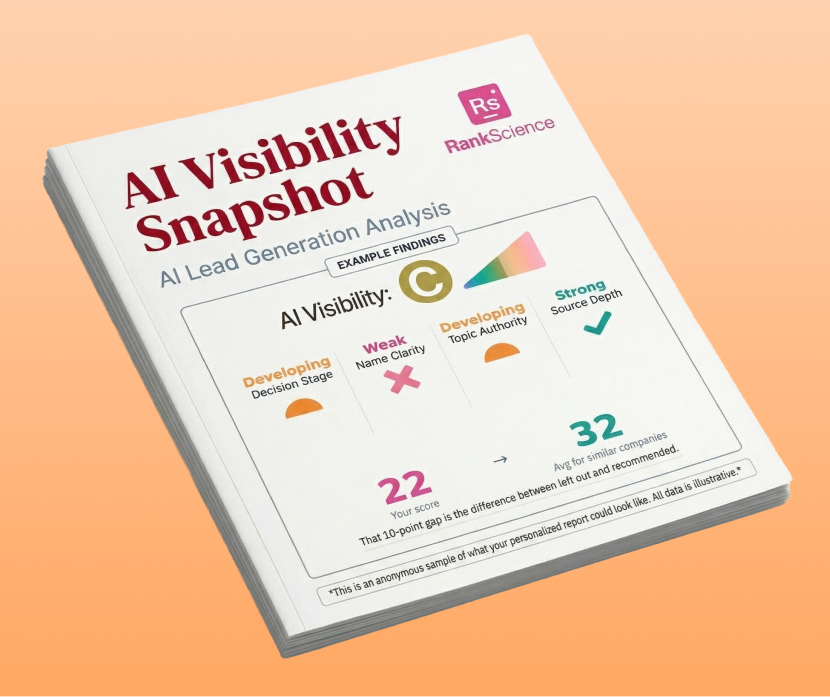
The free RankScience AI Visibility Snapshot shows exactly where you stand across major AI platforms like ChatGPT and Google AI Overviews.
Get Your Free AI Audit
RankScience LLC
2443 Fillmore St #380-1937,
San Francisco, CA 94115
© 2026 RankScience, All Rights Reserved