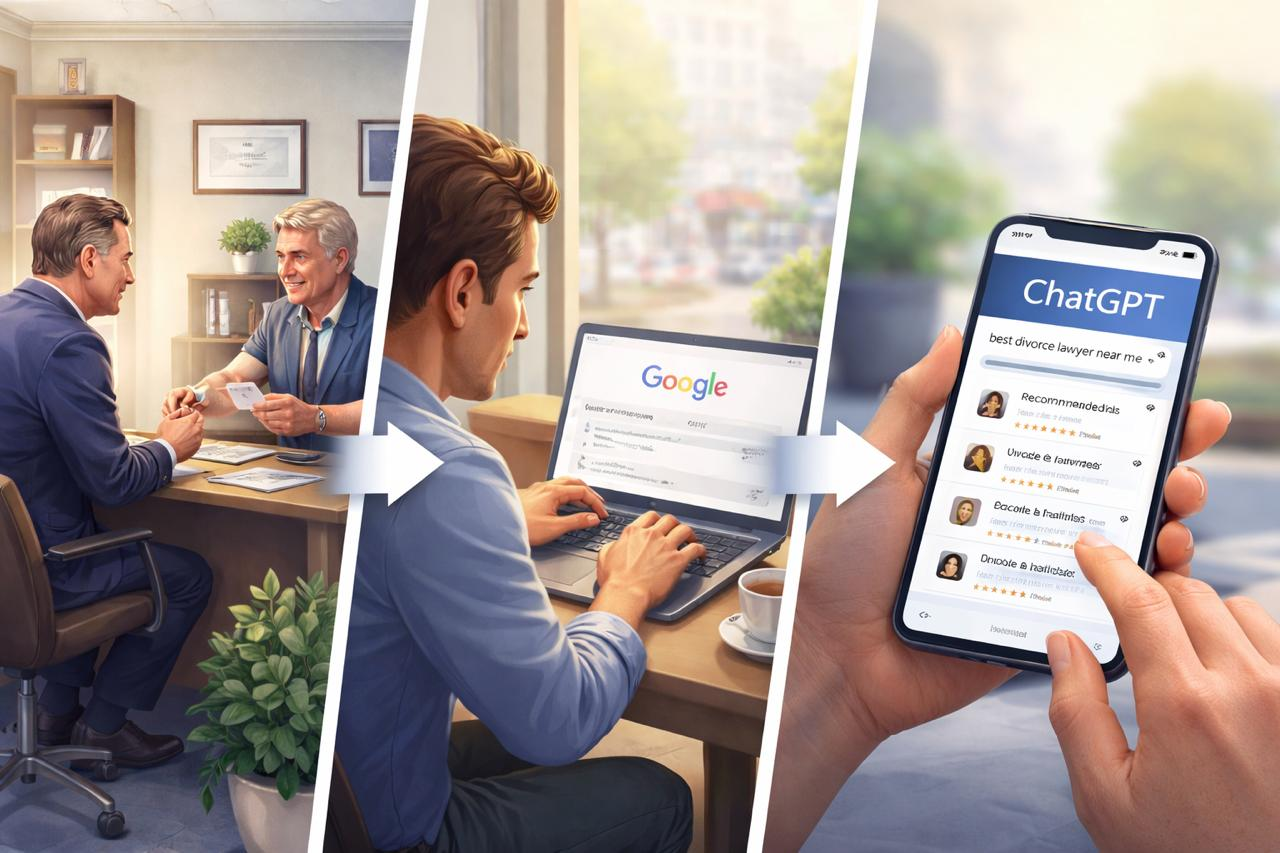

Google's AI now calls local businesses for pricing and availability on behalf of customers, and most business owners have no idea it's happening.

Google's Ask for Me has eight structural layers that compound against small, independent businesses. RankScience, an SEO and AI search optimization agency, breaks down all eight layers in this guide.

The businesses that understand Ask for Me now will have the edge as Google expands it into every local service category.

.png)

Google's Ask for Me feature lets customers trigger an AI call to local businesses to collect pricing and availability. Google began testing Ask for Me as a Search Labs experiment in January 2025 for nail salons and auto repair, then expanded it as the "Have AI check pricing" feature in Google Search in July 2025. By December 2025, the category list had grown to include pest control, plumbing, wellness centers and retail products. The feature has gone by multiple names: "Ask for Me," "agentic calling" (a term Google has used in official communications) and "Have AI check pricing" (the consumer-facing button). This guide uses "Ask for Me."
A customer searches for something like "oil change near me" or "pest control in [city]," and if Ask for Me is available for that category, a "Have AI check pricing" button appears in the search results. The customer enters service details, and Google's AI calls multiple businesses from the top local search results simultaneously.
A Google spokesperson confirmed in July 2025 that the AI selects businesses based on local rankings, meaning only top-ranked results get called. The customer receives a comparison summary via text or email within about 10 to 15 minutes.
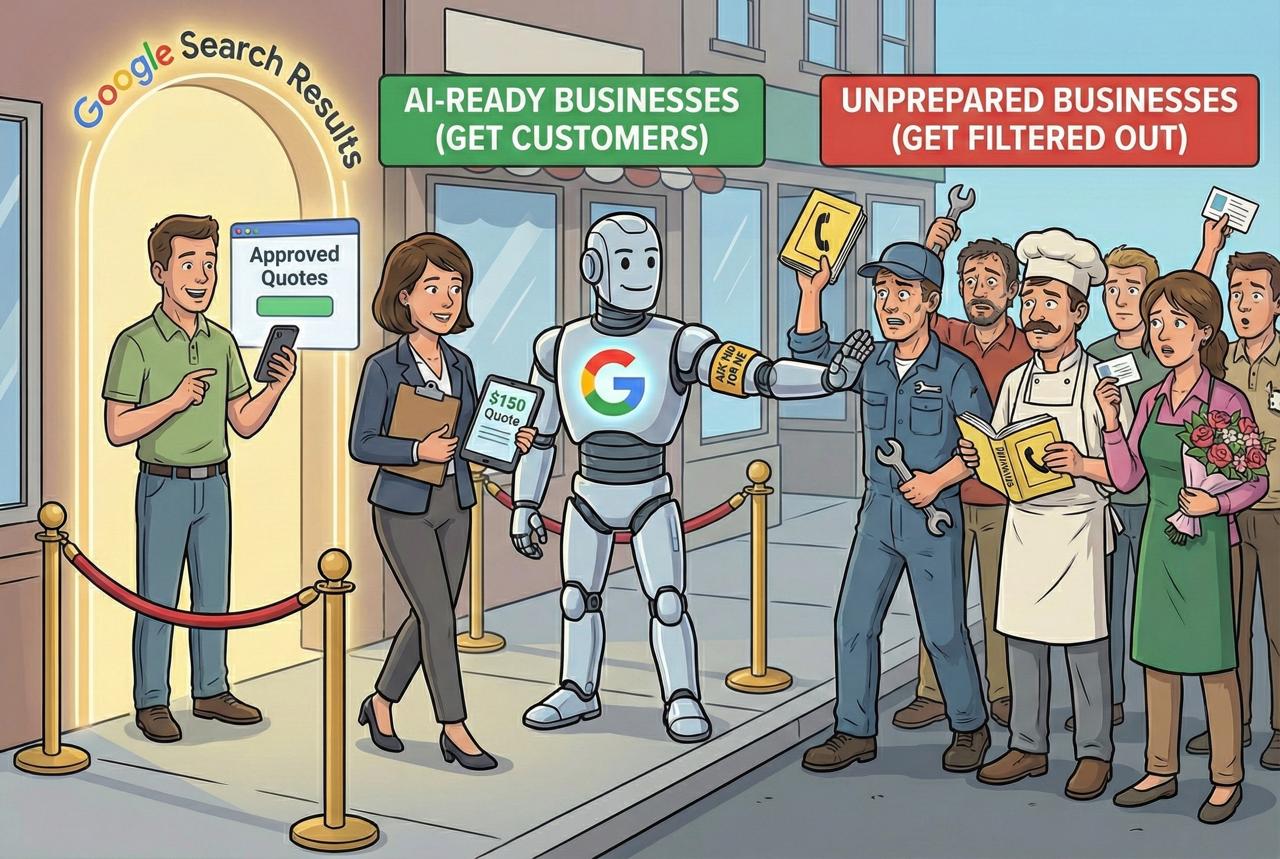
Businesses that miss an Ask for Me call don't just lose the opportunity. The customer's results show them under a "businesses we couldn't reach" label, with their contact information displayed below companies that answered and provided quotes. A plumber on a job site or a solo stylist mid-appointment gets branded "unreachable" while nearby businesses that picked up are shown with pricing.
Some business owners, concerned about AI calls disrupting operations, want to opt out. The options are limited. Business owners with a verified Google Business Profile can toggle off "Bookings and inquiries from customers in their advanced settings. Unverified businesses can only opt out by telling the AI during a live call.
Google keeps changing the name, and most coverage targets marketers, not business owners. In November 2025, independent testing revealed that nail salon owners receiving calls from Google's AI were just as confused as the testers. None had knowingly provided live quotes to Google.
Android Police, a mobile technology publication, noted in July 2025 that the feature has no consistent official name. Business owners can't find information about something that has no single name to search for.
At RankScience, we identified eight layers that filter out local businesses at every stage of the Ask for Me process. We call it the 8-Layer Filter.
The volume of Ask for Me calls is rising fast. Invoca, a call tracking and analytics platform, found Google's AI pricing calls grew 300%+ monthly through November 2025, with plumbing seeing over 650% monthly growth and veterinary services over 1,700%. Ask for Me is free right now, but as more customers rely on it, the businesses that aren't included fall further behind.

Here's what the filtering looks like for a typical service category.
Ask for Me pulls exclusively from top local search results, and businesses ranking outside the local pack are ignored entirely. Independent testing confirmed that 8 of the top 9 businesses were called while lower-ranked competitors never received a call. Local search rankings are improvable, and businesses that invest in strengthening their local SEO can move into the calling pool.
Many businesses that get called can't answer. Solo operators and one-chair salons are structurally unable to pick up mid-service. Invoca found that answer rates range from 66% to 79% by industry.
A call handling system or trained staff member who can pick up is the simplest way to stay in the results.
Even among businesses that answer the phone, nearly half can't deliver what Ask for Me needs: a clear price quote. Staff who don't recognize the AI caller may treat it like spam and hang up, and others work in categories like roofing or tree removal where pricing requires an on-site assessment first. Invoca's research found that 48% of businesses that answered failed to provide pricing. The industry reads this 48% figure as a phone-answering problem, but the data tells a different story. Most of these businesses don't know what these calls are. This is an awareness failure, not an operational failure. Businesses that recognize the AI caller and understand what it's asking can provide pricing, even approximate ranges, that keep them in the results.
Ask for Me delivers results as a price-and-availability comparison stripped of quality context: no star ratings, review counts, specializations or years in business. In this scenario, a premium shop with hundreds of five-star reviews appears next to a low-cost competitor, and the only visible difference is price. A business that spent 15 years building a five-star reputation gets reduced to a dollar figure next to a competitor that opened last month. Your reviews, website content and reputation are what help customers choose you over a cheaper option after they see the Ask for Me comparison, because customers still check your Google Business Profile and website before booking.
Local businesses hang up on automated callers because most robocalls are spam, and that conditioning is costing them real Ask for Me opportunities. Industry data from Tree Care Marketing Solutions, a service industry analytics provider, found that roughly 40% of Google Business Profile leads are spam. Only about 3% of calls claiming to be "from Google" are legitimate.

The fix is a quick, one-time team briefing.
Google collects pricing data from Ask for Me calls but gives businesses nothing in return: no customer contact information, no reporting and no visibility into how their data is used. Google's official support page states that pricing data can be reused for similar requests, meaning the quotes your staff provides may shape what future customers see without your knowledge.
Ask for Me creates a cycle that keeps reinforcing itself. Businesses that get called connect with more customers, earn more reviews and build higher local search rankings, which generates more Ask for Me calls. BrightLocal's 2026 ranking factors survey found that customer reviews account for 20% of how Google ranks businesses in local results. Businesses outside this cycle fall further behind with every round.
Opting out of Ask for Me removes your business from results while every competitor who stays in remains visible to customers in that system. The real question isn't whether to opt out, it's whether you're positioned well enough that staying in benefits you.
The first five layers are the ones you can actually do something about, and none require becoming an expert in local search optimization. Layers 6 through 8 are baked into how the system works and can't be fixed individually, which is why the things you can control matter most.
A closer look at your Google Business Profile data will show which of these layers are affecting you most.


Agentic calling is a term Google has used for the feature known as Ask for Me. The AI calls local businesses to compare pricing and availability, then sends the customer a summary. Users see it as a "Have AI check pricing" button in search results. Google began testing in January 2025 and expanded to all U.S. users by November 2025.
Google says it selects businesses based on traditional local search rankings. A Google spokesperson confirmed this in July 2025. Independent testing found that 8 of the top 9 businesses listed in local results were called. Businesses that don't appear in the top local pack results for their category will not receive Ask for Me calls.
Yes. In your Google Business Profile, navigate to advanced settings and toggle off "Bookings and inquiries from customers." This requires a verified Business Profile. Unverified businesses can only opt out verbally during a live call. Opting out removes your business from Ask for Me results while competitors who stay in remain visible to customers in that system.
Google's official support page states that information collected during Ask for Me calls "can be used to help with similar requests from other users." Pricing you provide during one call may inform responses to future customer queries. Businesses receive no reporting about how their data is used or how many Ask for Me calls they've received.
As of early 2026, Ask for Me is available across most of the United States but excluded from five states: Indiana, Louisiana, Minnesota, Montana and Nebraska. Google attributes these exclusions to "regulatory or technical considerations." The feature covers specific service categories that Google continues expanding, with pest control, plumbing and wellness centers added in late 2025.
Google's AI caller identifies itself as an automated system calling from Google on behalf of a specific customer and asks targeted questions about pricing for a named service. Spam robocallers use vague, generic scripts and never reference a specific customer request. If you hear a detailed, service-specific inquiry from a caller identifying as Google's automated system, it's likely real.

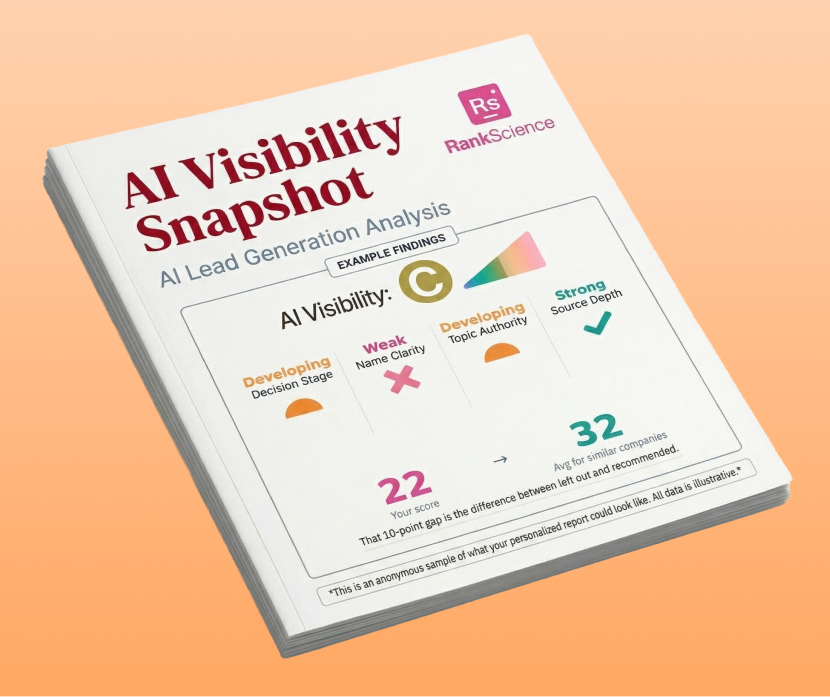
The free RankScience AI Visibility Snapshot shows exactly where you stand across major AI platforms like ChatGPT and Google AI Overviews.
Get Your Free AI Audit
RankScience LLC
2443 Fillmore St #380-1937,
San Francisco, CA 94115
© 2026 RankScience, All Rights Reserved