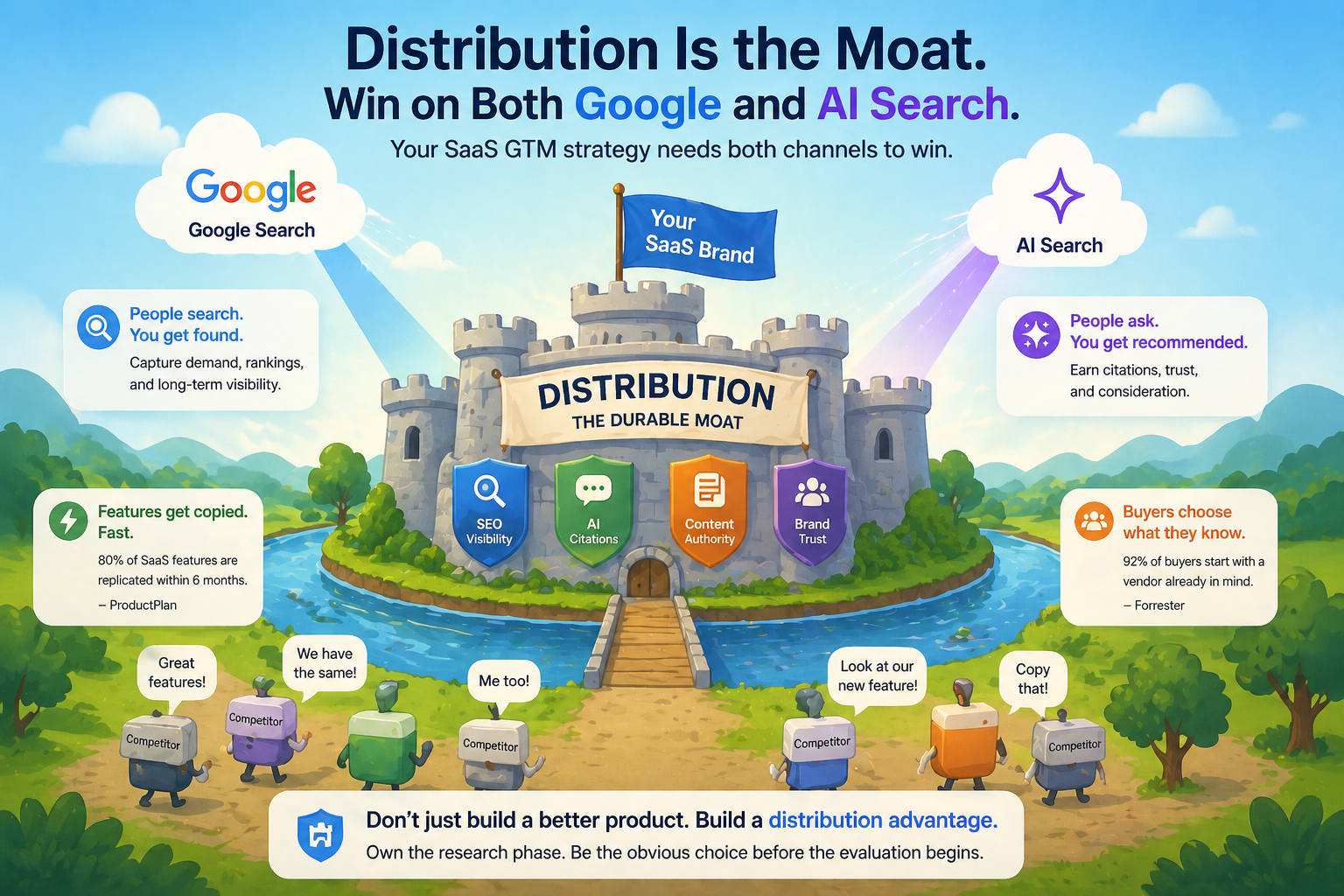


9 out of 10 B2B software buyers now use AI platforms like Perplexity for research, not Google

Perplexity converts 7x better than Google because buyers arrive already qualified and in decision mode

.png)

Your B2B SEO strategy optimizes for Google. But B2B buyers have added AI platforms to how they research. Nearly 9 out of 10 B2B software buyers now use AI platforms (ChatGPT, Perplexity, Claude, Gemini) for research, according to G2 Reach, a B2B software research platform. Among AI platforms, Perplexity converts 7 times better than Google searchers because it's purpose-built for research workflows.
Traditional B2B SEO targets Google's mixed-intent searches. Meanwhile, your buyers are researching on Perplexity, making decisions there, and arriving at your site only after they've already evaluated alternatives. That's the gap: B2B companies need visibility where buyers actually research, not just where they confirm decisions. In many B2B journeys, Google has shifted from being the research starting point to being a confirmation step after buyers have already done their evaluation in AI tools.
B2B buying behavior has fundamentally shifted from Google to AI platforms, with Perplexity dominating high-intent research. The research phase moved from Google to AI assistants as citation-focused platforms now resonate with B2B evaluation workflows.

Perplexity user behavior reveals why the platform dominates B2B research:
This is where your buyers are. B2B buyers define requirements, compare solutions, validate vendors, and make decisions on Perplexity, then come to your site to purchase. Your SEO strategy hasn't adapted to where research actually happens.
Traditional B2B SEO optimizes for mixed-intent keywords that attract unqualified audiences, while Perplexity captures buyers actively evaluating solutions.
Google SEO targets broad searches, such as "project management software" or "HR analytics platforms." Position #1 on Google means you beat competitors, but you're competing for an undefined audience. Who's searching? Could be a consultant researching clients. Could be a competitor analyzing your positioning. Could be a student writing a paper. Could be a buyer. You don't know.
Perplexity research happens differently. The queries contain context Google searches rarely include. The query "How to evaluate security software for healthcare companies with 200+ employees under HIPAA compliance" reveals industry, company size, regulatory requirements, and buying intent. A query like "Compare Salesforce vs HubSpot for B2B SaaS companies with $5M ARR" signals budget range, business model, and decision stage.
The difference compounds. B2B buyers on Google might be researchers, competitors, or tire-kickers. B2B buyers on Perplexity are actively evaluating solutions with specific requirements already defined.
When Perplexity cites your content, the buyer is already qualified and in decision mode. Google rankings don't reach them until after they've researched elsewhere. That's the problem.
Reaching B2B buyers during research requires shifting from awareness-focused Google SEO to evaluation-focused AI visibility. The companies that figure this out first will own the evaluation phase before you even appear.
Your content strategy needs to answer complete research questions, not just rank for keywords. Traditional B2B SEO chases "best CRM software" rankings. Perplexity visibility requires detailed comparison guides that explain how to choose, break down specific use cases, and address the questions buyers actually ask when evaluating alternatives. Comparison content that Google dismisses as "thin" becomes citation gold for AI platforms because it directly answers research queries.
Build citation authority that AI platforms trust. When B2B buyers ask "Is Salesforce or HubSpot better for companies at our stage?" on Perplexity, your content needs clear structure with headers, data, frameworks, and honest comparisons. Not marketing fluff, but real evaluation criteria. This is the kind of content that helps buyers make informed decisions, which is exactly what AI platforms prioritize when selecting sources to cite.

Track Perplexity visibility separately from other platforms because different research patterns warrant dedicated monitoring. The B2B buying sequence has changed: Research on AI, decision on AI, conversion on your site. Google became confirmation, not research.



Perplexity converts 7x better; Microsoft Clarity attributes this to its "citation-focused interface" attracting users who are actively researching, not casually browsing. Those users typically arrive with specific context and buying intent already defined. When someone reaches your content through Perplexity, they're evaluating, not exploring.
B2B buyers use Perplexity for iterative research, with 47% of queries including follow-ups. They ask complete questions with context like budget, company size, and requirements rather than keyword searches. Sessions run longer than Google, indicating deep evaluation rather than quick searches.
Perplexity prioritizes content that answers complete research questions. Detailed comparison guides, methodology frameworks, and honest evaluations with clear structure get cited most frequently. The platform favors content that helps buyers make informed decisions over promotional material. Focus on evaluation criteria, not marketing claims.

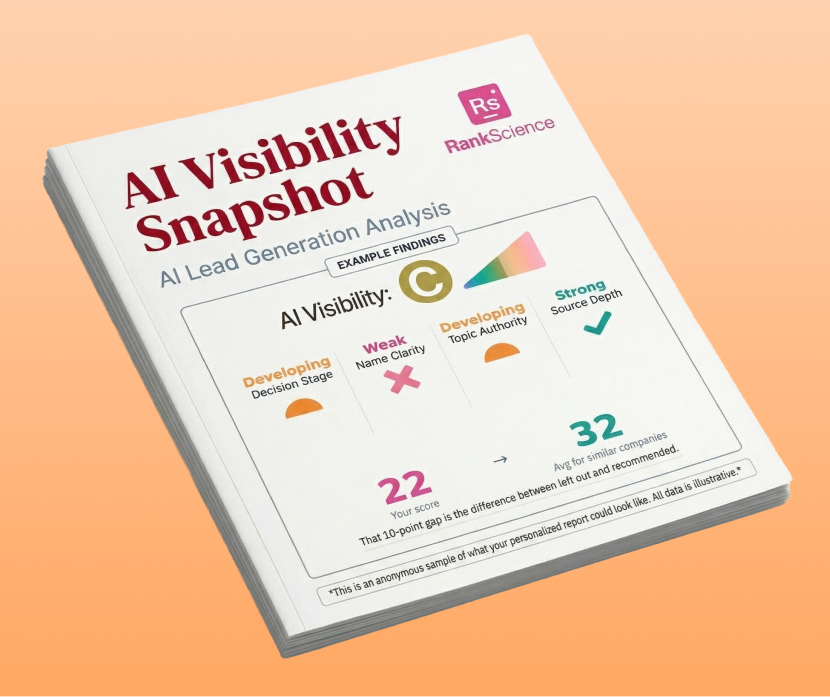
The free RankScience AI Visibility Snapshot shows exactly where you stand across major AI platforms like ChatGPT and Google AI Overviews.
Get Your Free AI Audit
RankScience LLC
2443 Fillmore St #380-1937,
San Francisco, CA 94115
© 2026 RankScience, All Rights Reserved